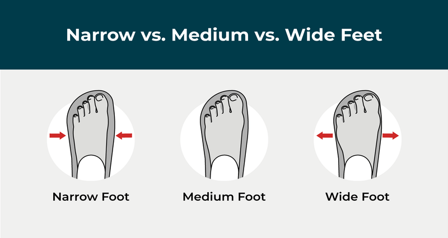
Buying Shoes for Wide or Narrow Feet that are actually supportive for wide or narrow feet is simply avoiding the chronic ergonomic damage you will cause to your body from fitting someone else’s shoe.
In the average person’s life, they will spend years walking in shoes that are the wrong fit, with a half size bigger shoe because
“it might be better,” or because you’ve bought some crazy thick sock that is supposed to fill the shoe up.
If you want to find the best fit possible, you first need to know your measurements,
check the physical build of the shoe,
and finally find the right brands to fill your extremity widths without undermining the structural support of the shoe.
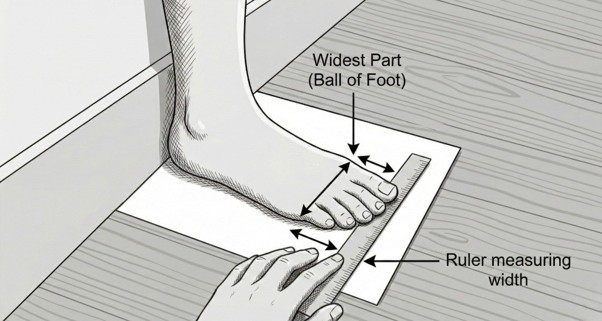
Know your real foot width before buying any other Shoes for Wide or Narrow Feet – don’t guess!
The best way is to measure your actual foot at the widest part –
the ball of your foot just behind your toes. For men, standard is D, wide is 2E, extra is 4E. For women, standard is B, wide is D, extra is 2E.
Use a metal Brannock at any shoe Shoes for Wide or Narrow Feet, or trace your bare foot on a piece of paper and measure across the ball of the foot with a ruler.
Your own body should be able to tell you a few things, too.
If your toes tend to splay apart easily when you walk around barefoot, or the front of your foot looks broader than the norm,
wide shoes are probably necessary for you. And if you experience sore, uncomfortable pressure on the outsides of your feet, or the toes of your shoes frequently develop raw,
blistered sores where they repeatedly rub up against the top material, then your shoes are too narrow.
Conversely, those with narrow feet will always feel the opposite: their shoes will slide a lot side to side,
the heels will slip right out of the shoes nearly every step, and you will end up fastening your laces so tightly that the fabric ends up bunched up.
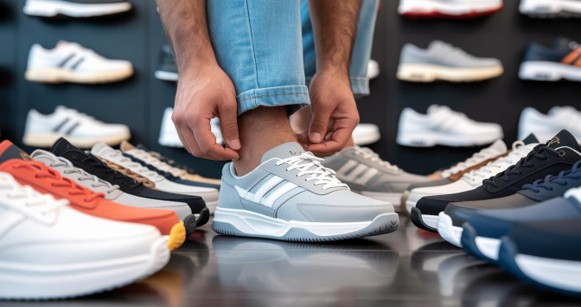
Give the pinch test in store. Stand on your foot when your feet are wide open when they carry your full body weight. There should be half an inch of space in front of your longest toe. Pinch the fabric in the centre of the width of the shoe. If you can’t pinch a little fold of fabric, it’s far too narrow. If there’s a huge amount of slack, it’s too broad.
Another easy way to check is to walk on some paper and draw your foot, then wear your shoes and draw around the shoes. The outline of the shoe should completely contain your foot trace at every point without cutting into the lines.
Marketing names such as relaxed fit, wide toe box or comfort toe box are totally useless. Be sure to check for the actual width sizes written on the box such as 2E and 4E.
These designations signify an exact and structural inch added to the width of the sole, not a loose and sloppy cut of the fabric across the top of the shoe.
It should allow your toes to spread comfortably without being constricted by the sides of the shoe. Rounded or square shapes are best, while pointed shoes are not – they put your foot into an unnatural triangle. The widest part of your shoe should also match the widest part of your foot (metatarsal heads). Walk a whole lap around the store,
and if your heel slides on each step or your pinkie gets pinched as you take a step, put the shoes back.
Features like dynamic lacing, velcro closures, or elastic side panels can help personalize fit if you experience high arches or swelling in the afternoon.
Always shop for shoes in the late afternoon or early evening.
Feet tend to swell throughout the day, so it makes sense to try shoes on after they have had the chance to reach their largest size.
Never size up in shoe length just to have the width fit, as this will instantly cause heel slippage and a complete lack of arch support,
not to mention quite a trip! Wear the pair of shoes you plan to buy with the same socks you use on a daily basis,
and if you wear custom orthotics, bring your set to the store and make sure the shoe will accommodate it comfortably, for a shoe that fits without it may become unwearable once you do place your orthotic inside.
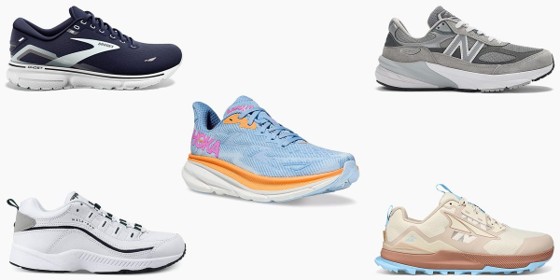
However, not all manufacturers offer width options, some shoes are only available in one width. But a few brands do offer width variations.
New Balance shoes.
They have several of the top-selling models such as the 990 series available in widths as far as 4E for men and the widest for women.
Brooks is one more excellent choice for serious runners or users
that do a lot of walking with extremely wide sizes of their Ghost models that have very supportive midsoles that allow for natural toe splay.
Hoka is known for their max cushion and their wide,
naturally broad platforms that are incredibly stable without forcing aggressive toe
box narrowing which makes hoka shoes ideal for plantar fasciitis.
Altra is on the entirely opposite end of the spectrum with their wide,
foot shaped toe box that directly contours to a runners’ natural anatomy. Each and every Altra shoe has a wide last.
These shoes also lean very heavily into shoes that are comfortable for orthopaedic or medical foot conditions.
Think shoes with extra depth, extra volume and orthopaedic arch support: bunions, diabetics or Arthritis sufferers with extra wide feet, like especially in the toe area.
10. ASICS / Saucony – Both these brands have a great selection of performance running shoes in wide width in both 2E and 4E.
For a true wide, well-designed trail / outdoor hiking shoes that really deliver a super wide fit with fantastic toe box room, try Merrell or Keen.

Certainly the shoes that have that baggy fit rule
that helps to make your collection from your real day to day life much easier to build.
| Oxfords, derbies, pumps | Business meetings, formal office settings, events |
| Casual shoes | Loafers, canvas shoes, slip-ons, fashion trainers | Weekends, casual offices, social plans |
| Sports Shoes | Running footwear, walking shoes, workout shoes |
Fitness, to and from locations, tourist attractions, outdoor activities |
Boots | Ankle boots, Chelsea boots, hiking boots, work boots | Cooler weather, commute, outdoor wear, travel
Open footwear | Sandals, slides, espadrilles, flip-flops | Warm weather, holidays, casual weekends |
These categories tend to blend in everyday life-a beautiful,
well-made leather sneaker is one part weekend casual, one part office casual in a startup.
If you’re just starting to build a new wardrobe for wide feet,
you need only 3 pairs to get started-an excellent walking sneaker, a smart looking work shoe, and a flexible, well-vented weekend shoe so you don’t destroy your formal shoes by walking miles in them.
Always try on your new Shoes for Wide or Narrow Feet to the foot that is considerably bigger-
invariably we all have one foot that is a little wider, or a little longer than the other. Do not just go by online review on width as footwear fit is very personal and individual.