
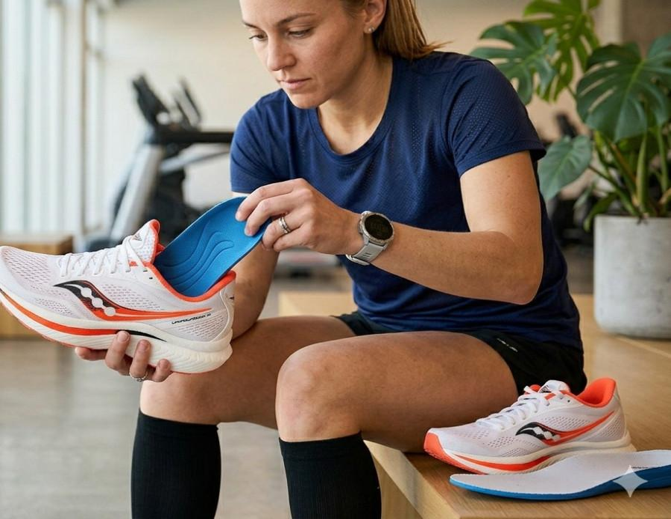
The Right Insoles for Shoe Comfort make shoes more comfortable:
they decrease stress on the heels and toes and make the shoes more cushioned and give great support to the foot.
But they are not all the same and ultra-soft gel insoles can be awkward and orthographic footbeds
that are firmer require some patience to settle into them. The type of shoe and activity that The user can chose to the needs of the user.
The Right Insoles for Shoe Comfort are a welcome addition to most comfortable and well-fitting footwear
but they cannot rectify a bad fit.
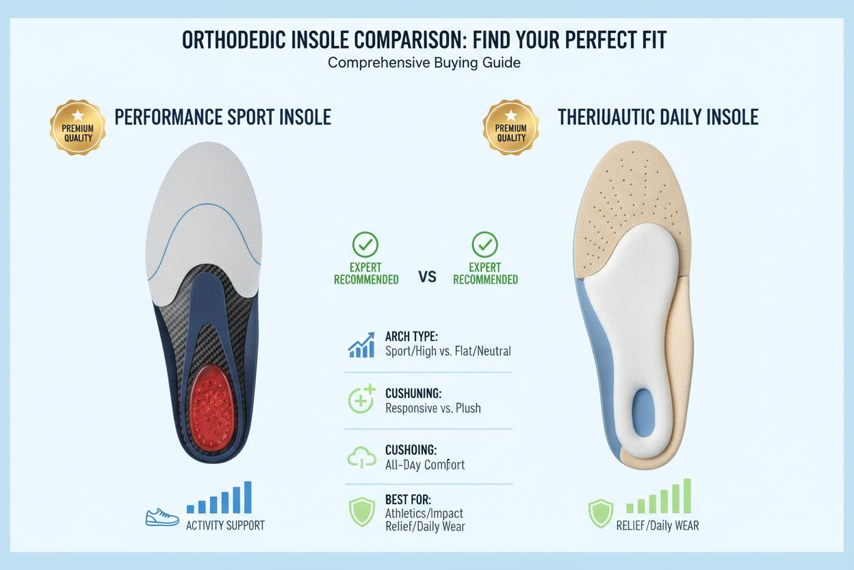
If the shoe has a factory footbed, it’s likely only for appearance. Factory footbeds generally aren’t enough for comfort, support, and padding for the average user. The insoles can be install to make the shoes more comfortable
by diminishing the contact pressure on the front part of the foot (including the toes), taking some of the pressure off the heel,
mitigating the impact compression discomfort, and adding a larger base of support to prevent slipping during movement. These Right Insoles for Shoe Comforts can also be use to eliminate dead space in the shoes, decreasing leg fatigue.
Another myth is “the more cushion, the more comfortable” when talking about insoles.
Even though the more padding will make a shoe more comfortable,
if it is too soft, it will decrease the insole’s ability to support the foot,
therefore decreasing the contact area and stability. This will also cause discomfort when practicing some sport where you will need space in the toes. Comfortable Right Insoles for Shoe Comfort should be supportive and cushioned, which is a mix of both.
If your work requires walking on cement all day,
an hour-long break without any body weight on your feet can help improve circulation.
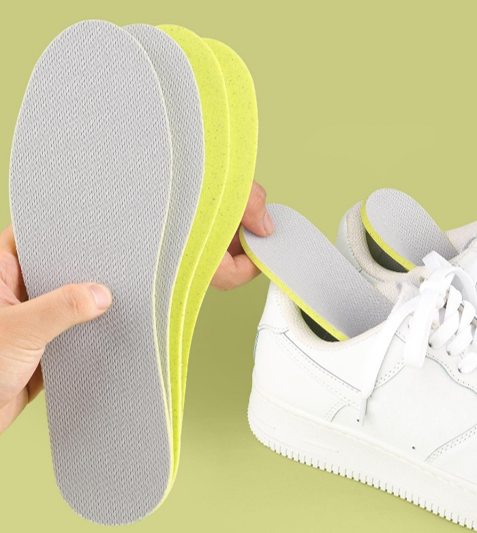
Insoles can be useful to almost every discomfort of the shoe: if the feet are sore after a long walk,
if the heel hurts in the morning or if at the end of the day the arch area is numb, the insoles in the shoe can play a fundamental role of relief of the foot. These can help if the shoes are particularly uncomfortable or if the foot tends to slip into the shoe.
In all these cases, however, to allow the insole to settle well and not risk pain or swelling in the foot, the first few times should not be very long:
a few tens of minutes and an hour of total should be sufficient.
In addition, new insoles may have a somewhat different shape,
including a much more marked arch and a more accommodated heel cup.

Gel insoles vs foam insoles Gel insoles absorb shock effectively, so they are suitable for wearers who walk or run on hard surfaces. They cushion the heels and relieve some pressure from the balls of the feet.
Yet, gel insoles typically don’t provide enough support or a molded fit, especially in the arch, and make the feet sweat due to poor breathability.
The foam insoles are, however, much more varied in their shape and size. They can be make from memory foam, EVA or high-density foam to provide combined comfort, support and breathability. A high-density foam insole will provide a good grip on the foot and a non-slip support surface. They tend to be more breathable than gel insoles and also provide support that is more structured. When making a choice between foam and gel insoles, the users should keep in mind that the former is generally more breathable
and provides better structured support while the latter is better for absorbing impact, especially in the heel. The shape and fit of the insole are also important:
the users should make sure that they are fit for people with flat feet or overpronation so to offer these people additional arch support.

Never put 2 insoles in a shoe! This will decrease the room for the toes, and make bruising in the toes and ingrown toe nails more likely. Putting 2 insoles in a shoe will increase the pressure on the top of the foot and close off circulation which can be dangerous. The second insole will change the distribution of pressure on the foot and will make the insoles ineffective (and possibly cause damage to the feet). It also make the shoe impossible to wear because it alters the volume of the inside of the shoe: putting 2 insoles in a shoe is like wearing 2 pairs of socks.

Most insoles are great, but every now and then there are some insoles that can be irritating to your feet or even damaging. An insole that is hard can lead to serious pain, tingling and numbness of the feet. They can also take up room in the shoe leading to squeezing the toes and cutting off circulation to the foot.
In addition, insoles no longer work when the active layer has been overuse. FOAM insoles for example can no longer bend and have lost their elasticity, gel insoles will flatten, and the top layer of any insole can be dirty and unhealthy. In addition,
there is a shelf life for insoles before they have to be thrown out and you can’t compensate with innersoles for badly designed shoes that are deformed and don’t support the foot. In addition, apply Caution using insoles if there is a circulation problem (e.g. Diabetes) or if the problem stems from an underlying condition.
As for how to improve the Right Insoles for Shoe Comfort of shoes, as a general rule, it should be 3 steps: selecting the correct size, choosing the correct insole, and wearing the appropriate clothing. Size is very important, it should be comfortable and safe. Measure the feet, and take the bigger size if the feet are expanded in the daytime. For the shoe, your toes should be able to bend, and there should be a protruding part in the middle of the foot: long and narrow shoes will cause serious harm to the feet.
And also, insoles should be chosen for activity and individual need, not for thickness or density. Orthopedic or higher density insoles may be uncomfortable for untrained feet, they need to be gradually broken in. Socks can also contribute to shoes’ comfort: in a narrow shoe, a thick cotton sock can cause blisters. And last but not the least, trash your worn-out shoes: deformed shoes that contact the ground unevenly or with uneven heel height are detrimental to the feet.